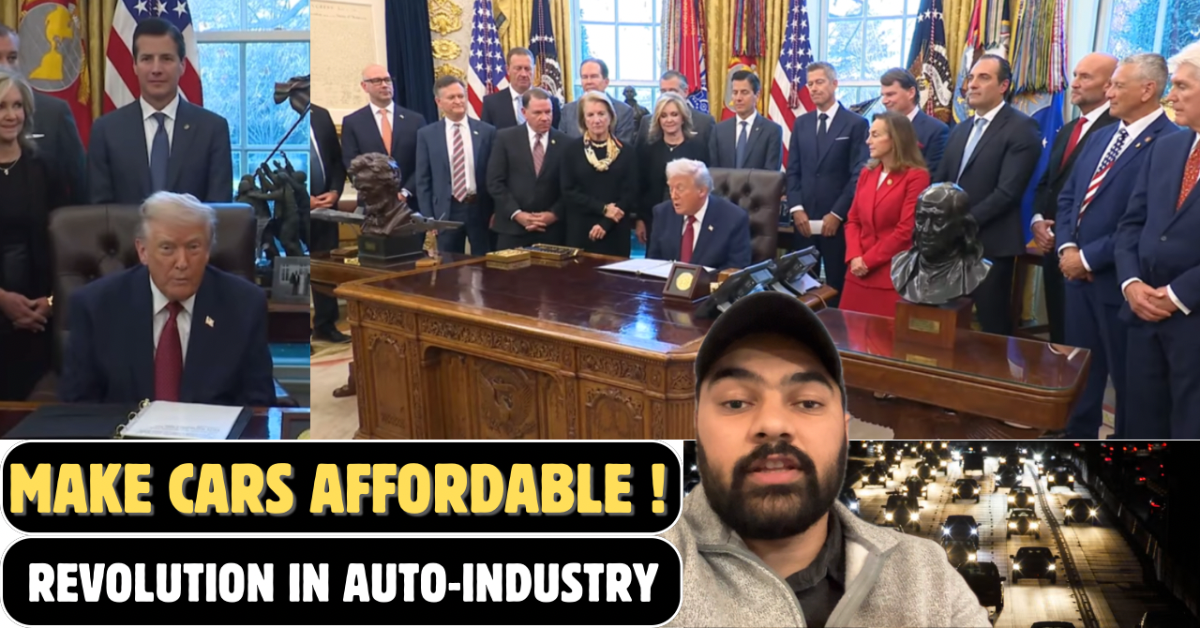
President Donald J. Trump has officially announced a major “reset” of the Corporate Average Fuel Economy (CAFE) standards, a move that is set to reshape the auto industry, vehicle prices, and future fuel-efficiency rules in the United States.
The president argued that the previous administration’s standards were “costly, unrealistic, and essentially an EV mandate.” The new plan aims to reduce regulatory pressure on automakers and lower prices for consumers.
🚗 What Are CAFE Standards?
CAFE standards are federal rules that require car manufacturers to meet a specific average miles-per-gallon (mpg) across their vehicle lineup.
The higher the standard, the more fuel-efficient vehicles must be.
The Biden-era rules targeted around 50.4 mpg by 2031—a level automakers said could only be reached with massive EV sales.
🔥 What Trump’s New “Reset” Does
Under the newly announced plan:
1. Fuel-Efficiency Targets Will Drop
The new fleet-average goal will be about 34.5 mpg by 2031, far lower than the previous 50+ mpg requirement.
2. EV Push Gets Rolled Back
The administration says the old standards forced automakers toward electric vehicles, even when consumer demand wasn’t matching government expectations.
3. Credit Trading System Ends in 2028
Previously, companies like Tesla could sell fuel-efficiency credits to other automakers.
This program will be phased out, giving all manufacturers the same playing field.
4. Goal: Lower Car Prices
The White House claims the rollback will help reduce vehicle prices by cutting expensive regulatory burdens.
Why the Administration Supports the Change
According to the president:
-
The prior rules were “unlawful overreach.”
-
American families will save money on new cars.
-
The auto industry will get more “realistic and stable” regulations.
-
Gas-powered vehicles will remain affordable for working-class Americans.
The administration also emphasized that many consumers still prefer traditional gasoline cars and are not ready to fully shift to EVs.
Critics Raise Environmental Concerns
Environmental groups, Democrats, and clean-energy advocates strongly oppose the move, warning that:
-
Lower standards will increase pollution
-
Drivers may pay more for gasoline in the long run
-
The U.S. will fall behind in the global EV and clean-energy race
Some analysts argue that while sticker prices might drop, the rollback could increase fuel costs over the lifetime of a vehicle.
Critics Raise Environmental Concerns
Environmental groups, Democrats, and clean-energy advocates strongly oppose the move, warning that:
-
Lower standards will increase pollution
-
Drivers may pay more for gasoline in the long run
-
The U.S. will fall behind in the global EV and clean-energy race
Some analysts argue that while sticker prices might drop, the rollback could increase fuel costs over the lifetime of a vehicle.
What This Means for American Consumers
If the proposed standards go into effect:
-
Gas-powered cars may become cheaper
-
Fewer EVs may be required in dealerships
-
Fuel costs may rise depending on vehicle choice
-
Environmental rules may shift again depending on future administrations
Final Take — Big Change for the U.S. Auto Market
This CAFE “reset” marks one of the most significant regulatory changes in the auto industry in years.
It reinforces President Trump’s push to reverse EV mandates, reduce regulations, and prioritize consumer choice.
For now, the proposal will go through the federal review process — but its impact on prices, emissions, and the future of electric vehicles will be closely watched nationwide.