
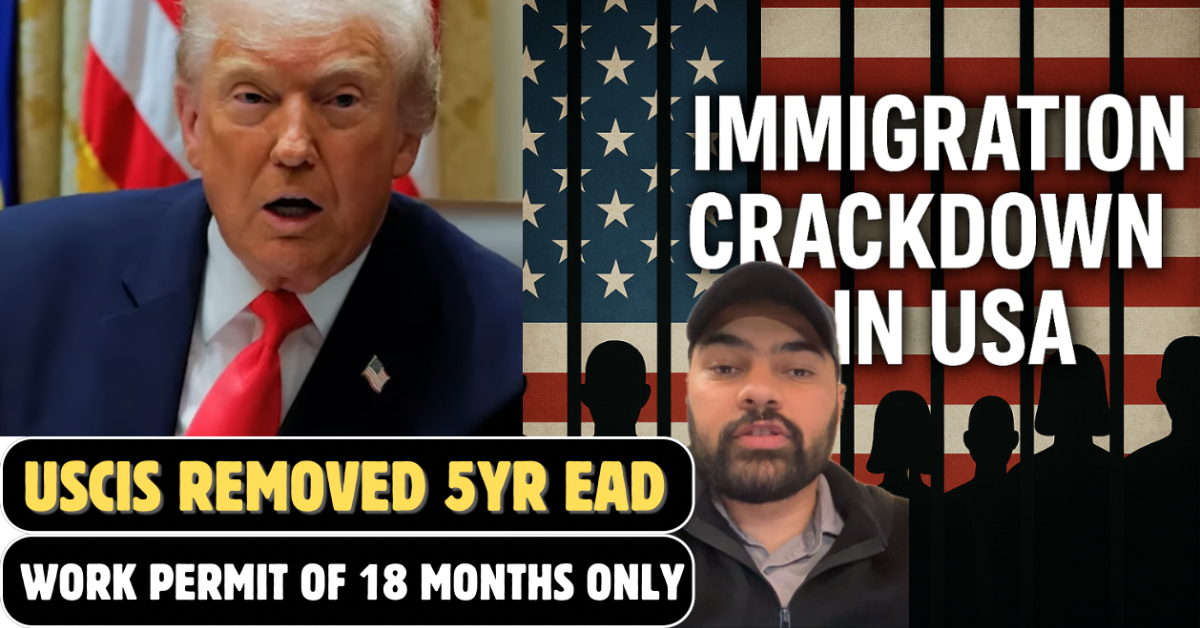
In a major shift announced in early December 2025, USCIS has updated its policy on how long Employment Authorization Documents (EADs) remain valid. Effective December 5, 2025, the maximum validity period for certain categories of EADs has been reduced from a five-year term to just 18 months.
The change affects both initial EADs and renewals for a number of categories: refugees, asylees, those granted withholding of removal or other humanitarian/parole-based protections, and immigrants with pending adjustment-of-status (AOS) applications (e.g. I-485) under U.S. immigration law.
Importantly, this does not apply to all EAD holders. For example, EADs tied to certain non-immigrant visas (such as H-1B, H-4, etc.) are generally not affected.
According to USCIS, the reduction is intended to allow for more frequent vetting and background screening of individuals whose immigration status remains unresolved — a move the agency frames as part of its effort to enhance national-security safeguards.
What It Means in Practice: Impacts on Immigrants, Green-Card Seekers, and Employers
-
More frequent renewals: Those impacted will need to submit renewal applications much sooner than before — roughly every 18 months instead of every five years.
-
Higher risk of gaps in work authorization: Combined with the fact that automatic EAD-extensions have recently been eliminated, there’s a real risk that delays in renewal processing could lead to lapsed work authorization, even for long-waiting applicants.
-
Increased cost and administrative burden: Frequent renewals mean more paperwork, filing fees, and possibly legal/attorney fees for applicants. For employers, the change implies more frequent I-9 reverifications and a potential increase in HR workload.
-
Uncertainty for green-card / AOS applicants: Many immigrants awaiting permanent residency depend on EADs for lawful work authorization. The shorter validity might amplify anxiety, especially given existing delays and backlog in processing green-card applications.
Why USCIS Says It’s Doing This
According to USCIS directors and public-statements issued with the policy change, the shortened validity period is designed to:
-
Facilitate more frequent background and security vetting of noncitizens whose immigration cases remain unresolved.
-
Provide increased opportunities to detect fraud, misrepresentation, or security risks among applicants — particularly among asylum seekers, refugees, or humanitarian parolees.
-
Bring more oversight and flexibility to immigration-related work authorizations, especially in light of shifting legal and legislative priorities under the current administration.
Reactions, Concerns, and Broader Implications
-
Anxiety among immigrants and applicants: The reduction has been described as triggering “anxiety” and uncertainty among many immigrants — especially those awaiting green cards or with long pending applications — because their ability to work now depends on more frequent renewals.
-
Potential backlog & delays at USCIS: Given the increased volume of renewals, experts warn that USCIS processing times could slow further — heightening the risk of job disruptions for workers dependent on EADs.
-
Economic and workforce impact: Industries that rely heavily on immigrant labor — from agriculture to services — may face labor shortages or workforce instability if employees lose work authorization due to delays. Multiple media outlets suggest employers will need to adjust hiring and compliance practices.
-
Legal and policy debates intensify: Advocates for immigrants argue the change undermines stability for vulnerable populations, especially asylum seekers and those awaiting status decisions. Others highlight concerns about fairness, bureaucracy, and undue burdens on immigrant families.
What Immigrants and Applicants Should Do (Practical Advice)
-
Monitor expiration dates closely — if your EAD was granted after December 5, 2025 (or is pending), assume gross validity is 18 months.
-
File renewals as early as legally allowed — many legal experts recommend applying as soon as 6 months before expiration.
-
Communicate with employers about potential gaps — especially if their HR systems were used to longer-term EADs, so they are prepared for more frequent reverification.
-
Stay updated on USCIS processing times — delays are possible now with increased renewal volume; plan accordingly to avoid unauthorized employment periods.
-
Seek legal counsel if unsure — especially if you have a complicated immigration situation (asylum, pending I-485, TPS, humanitarian parole, etc.).
Looking Ahead: What This Could Mean for the US Immigration Landscape
This policy change marks a clear shift toward tighter oversight and more frequent scrutiny of immigrant work authorization. If renewals remain frequent and processing times slow, we could see:
-
Increased instability for immigrant workers and their families.
-
Labor shortages in sectors reliant on immigrant employees.
-
More administrative burden on employers and USCIS alike.
-
Heightened urgency among applicants awaiting permanent residency to adjust status before EAD expiration or renewal delays.
In the broader context, this reflects a broader shift in U.S. immigration policy — one that prioritizes security and vetting over long-term authorization for noncitizens awaiting final decisions.